
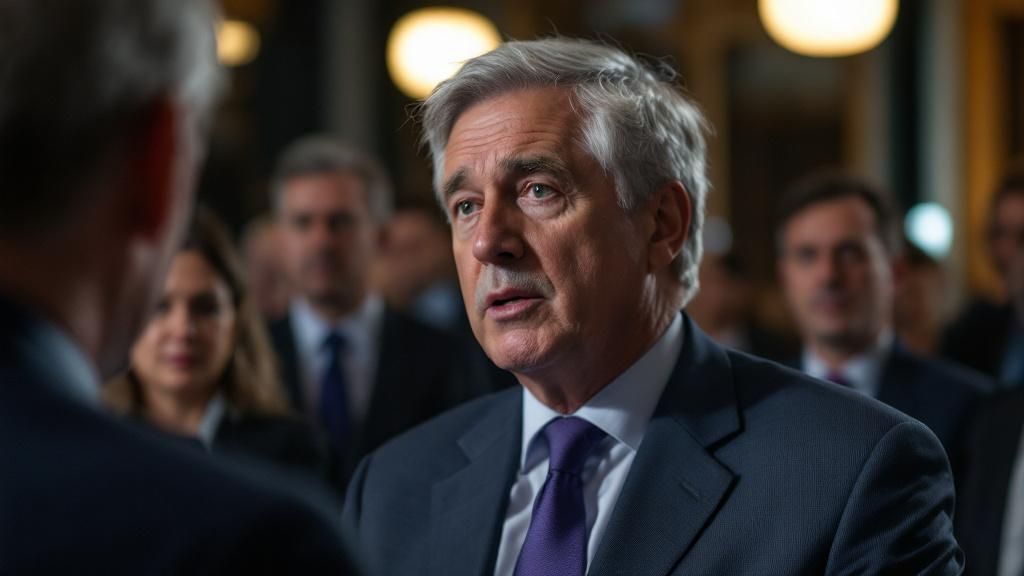
As households across the nation struggle with skyrocketing energy bills and price increases reaching record levels, the opposition figurehead has launched a scathing attack on the Government’s management to the living costs crisis. In a tense parliamentary confrontation, the Labour party has questioned the administration’s inadequate support measures, pressing for more substantial support to help hard-pressed families. This article analyses the mounting political tensions relating to the crisis and explores the competing approaches for economic relief.
The Opposition party’s Assessment of Government Policies
The opposition leader has stepped up examination of the government’s handling of the mounting cost-of-living emergency, contending that present interventions prove inadequate in addressing the level of hardship facing British households. In parliamentary debate, the opposition has set out a detailed critique encompassing limited financial aid, inadequate action in the energy sector, and a apparent absence of urgency in tackling inflation. The opposition argues that whilst families struggle with record-high bills, the government’s fragmented strategy simply treats symptoms rather than addressing root causes of financial hardship.
Central to the opposition’s argument is the assertion that the government has seriously underestimated both the severity and duration of the crisis. Opposition spokespersons have pointed to statistical evidence indicating that vast numbers of families now face genuine hardship, with many compelled to decide between warmth and food. The opposition contends that the government’s early action underestimated the crisis’s consequences, leading to assistance programmes that proved inadequate when the situation got worse further. This miscalculation, they argue, reflects wider shortcomings in forecasting accuracy and policy planning.
Insufficient Assistance Provisions
The opposition has specifically targeted government support schemes as insufficient and poorly targeted, maintaining that energy price cap mechanisms fall short of protecting vulnerable populations adequately. Commentators highlight that whilst the government has established various financial interventions, including grants and council tax rebates, these measures provide only temporary relief without tackling structural challenges. The opposition contends that income-assessed support remain too restrictive, excluding millions of employed households who yet contend with rising costs. Moreover, they argue the government’s approach lacks the boldness required to tackle such an unparalleled economic difficulty.
Opposition examination suggests that current support mechanisms negatively impact those earning mid-range salaries who sit outside eligibility thresholds for means-tested support. The party has outlined alternative frameworks centred on unconditional income transfers, broadened support schemes, and direct government intervention in fuel sectors to maintain affordability. They highlight that interim steps, though beneficial, cannot substitute for comprehensive structural reform. The opposition argues that without substantial legislative change and greater state spending, households will remain subject to significant economic hardship for years to come.
Extended Economic Strategic Concerns
Beyond immediate crisis management, the opposition has raised fundamental questions regarding the state’s long-term economic direction and competitive standing. Opposition analysts argue that the current approach focuses on near-term political appearances over long-term economic sustainability, potentially compromising Britain’s future economic wellbeing. They contend that without targeted investment in clean energy infrastructure, productive capacity, and workforce development, the nation risks extended economic stagnation. The opposition stresses that tackling cost of living challenges requires comprehensive reforms targeting output efficiency, innovation, and economic sector development alongside pressing relief measures.
The opposition has outlined concerns that government policy is fragmented across different sectors, with energy policy, industrial strategy, and fiscal measures functioning separately rather than as integrated components. Critics argue this disjointed strategy hinders resolution of persistent inflation and fundamental economic problems. The opposition advocates for a coordinated national strategy encompassing energy transition, manufacturing revival, and skills development. They maintain that genuine crisis resolution demands transformative policy reform rather than modest changes to existing frameworks.
Government’s Response and Counter-arguments
The government has firmly defended its economic strategy, arguing that the living cost challenges are largely driven by worldwide circumstances beyond Westminster’s direct control. Ministers have underscored the exceptional character of the energy shortage, arising from geopolitical tensions and global supply chain breakdowns. They contend that their targeted support packages, including the price cap on energy and cost of living payments, represent a measured and fiscally responsible approach. The Government Treasury maintains that excessive spending could exacerbate inflation further, undermining sustained economic stability and eventually damaging the very households the opposition claims to champion.
Government representatives have highlighted the significant monetary support already deployed, reaching billions of pounds in immediate aid to those in need. They argue that their approaches reconcile short-term assistance with disciplined budgeting, preventing the debt spiral that uncontrolled expenditure could cause. Ministers also draw attention to their work in boosting energy security through sustainable energy projects and market diversification. The government contends that whilst the opposition offers sympathetic language, their suggested policies lack financial viability and would prove unsustainable without increasing taxation or additional debt.
Furthermore, state representatives highlight their commitment to addressing underlying economic challenges through output gains and business investment incentives. They contend that sustainable recovery demands structural economic reforms rather than short-term payments. The administration holds this strategy ultimately delivers increased wealth and security for every citizen.
